Cardiocrinum giganteum
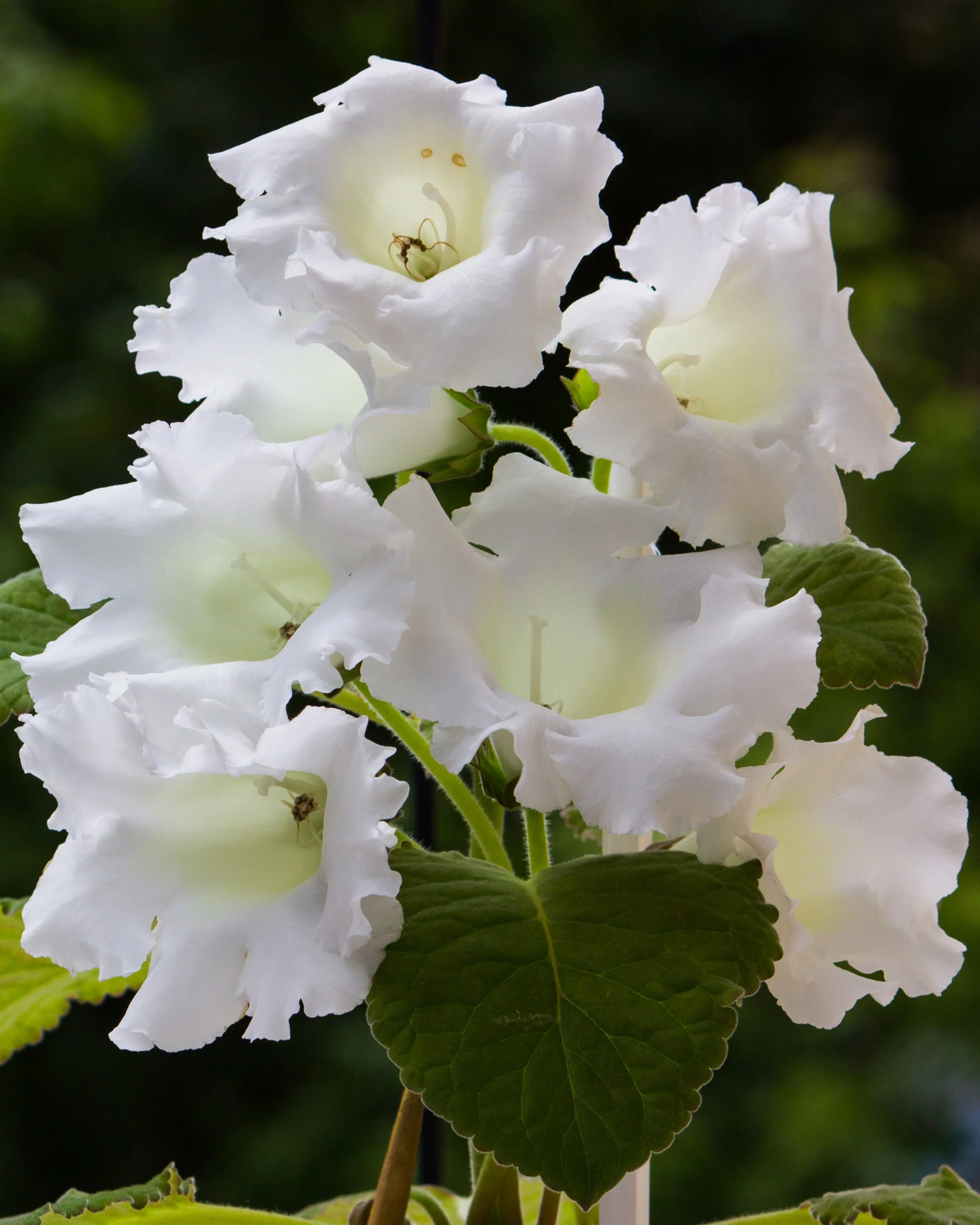
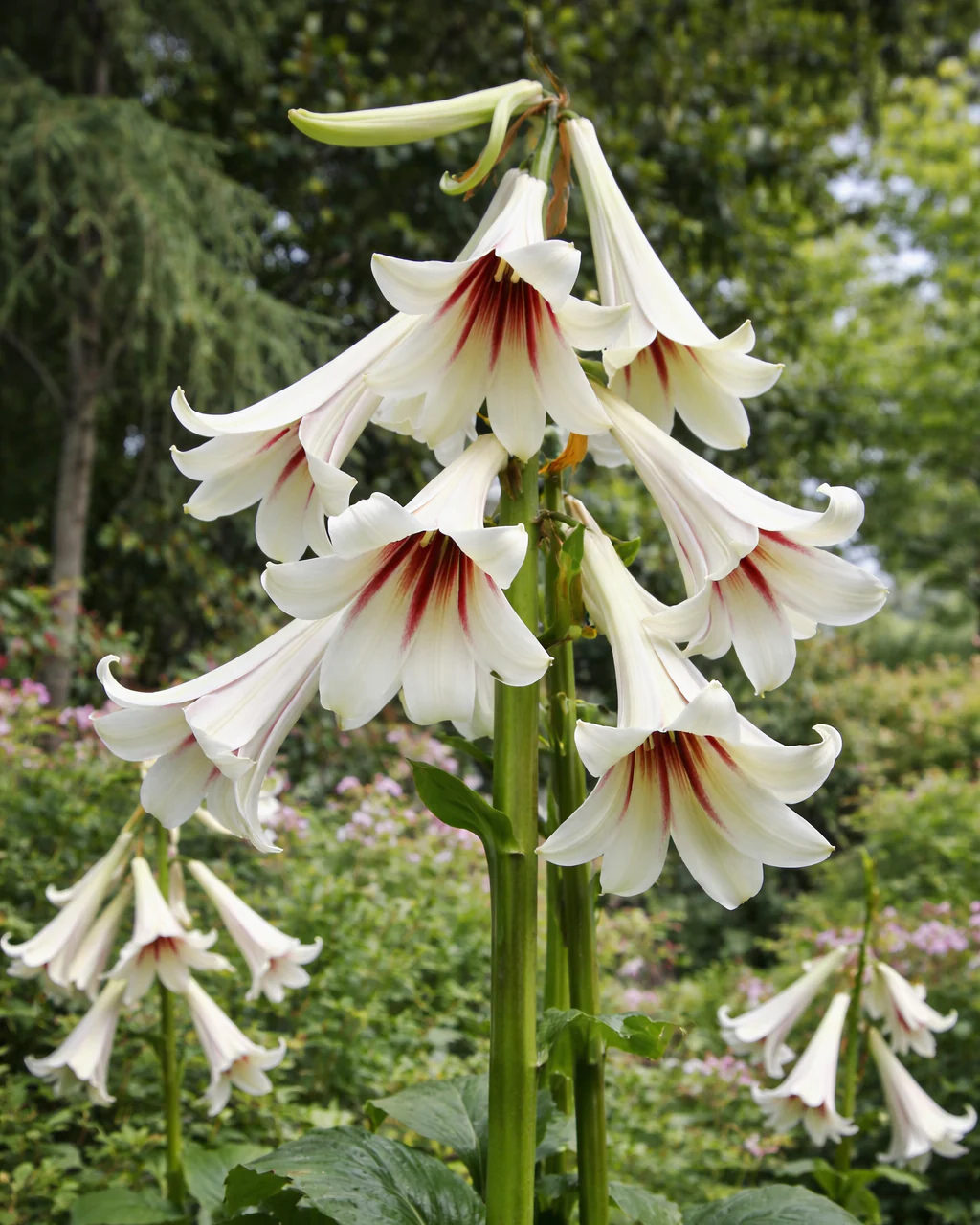
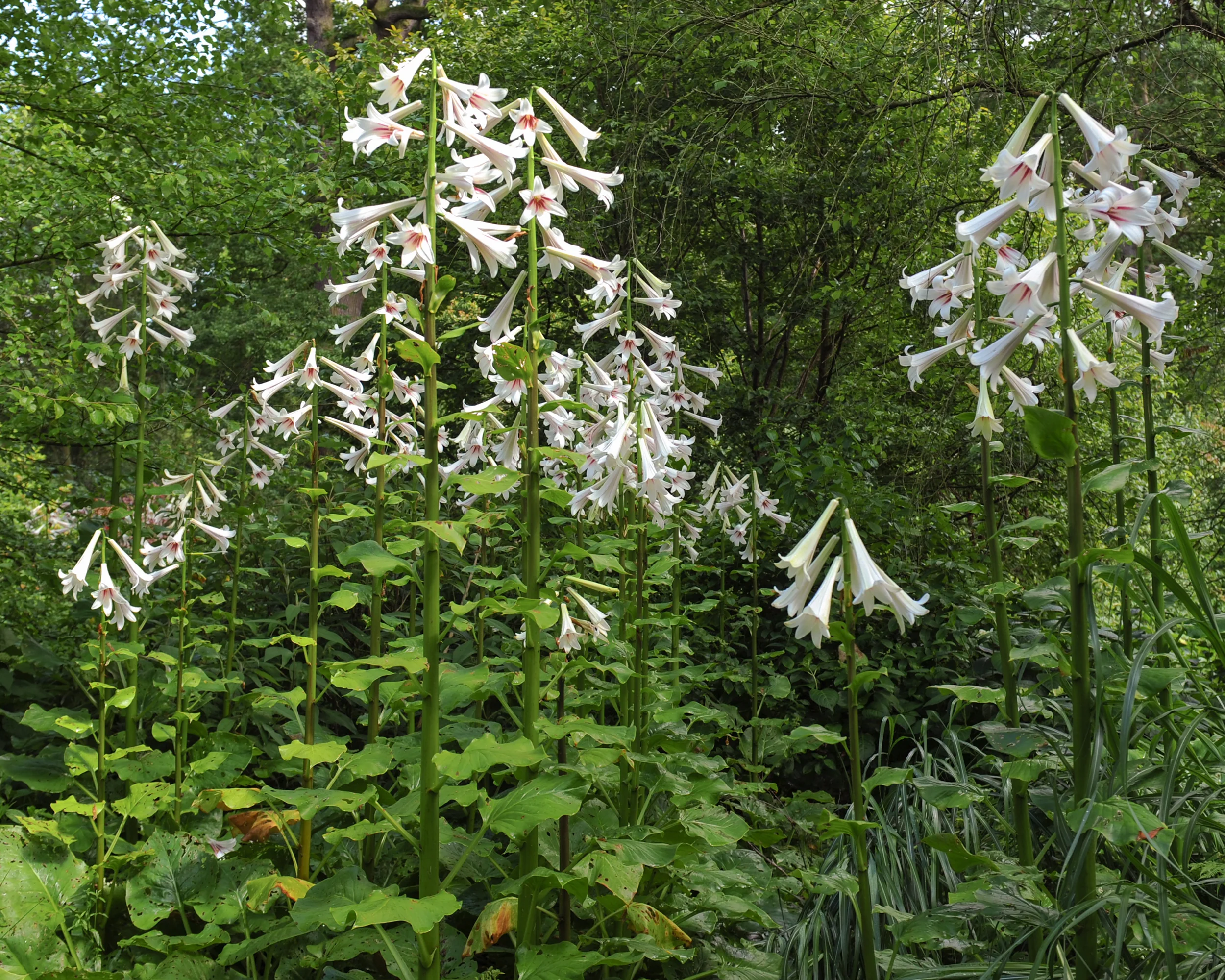
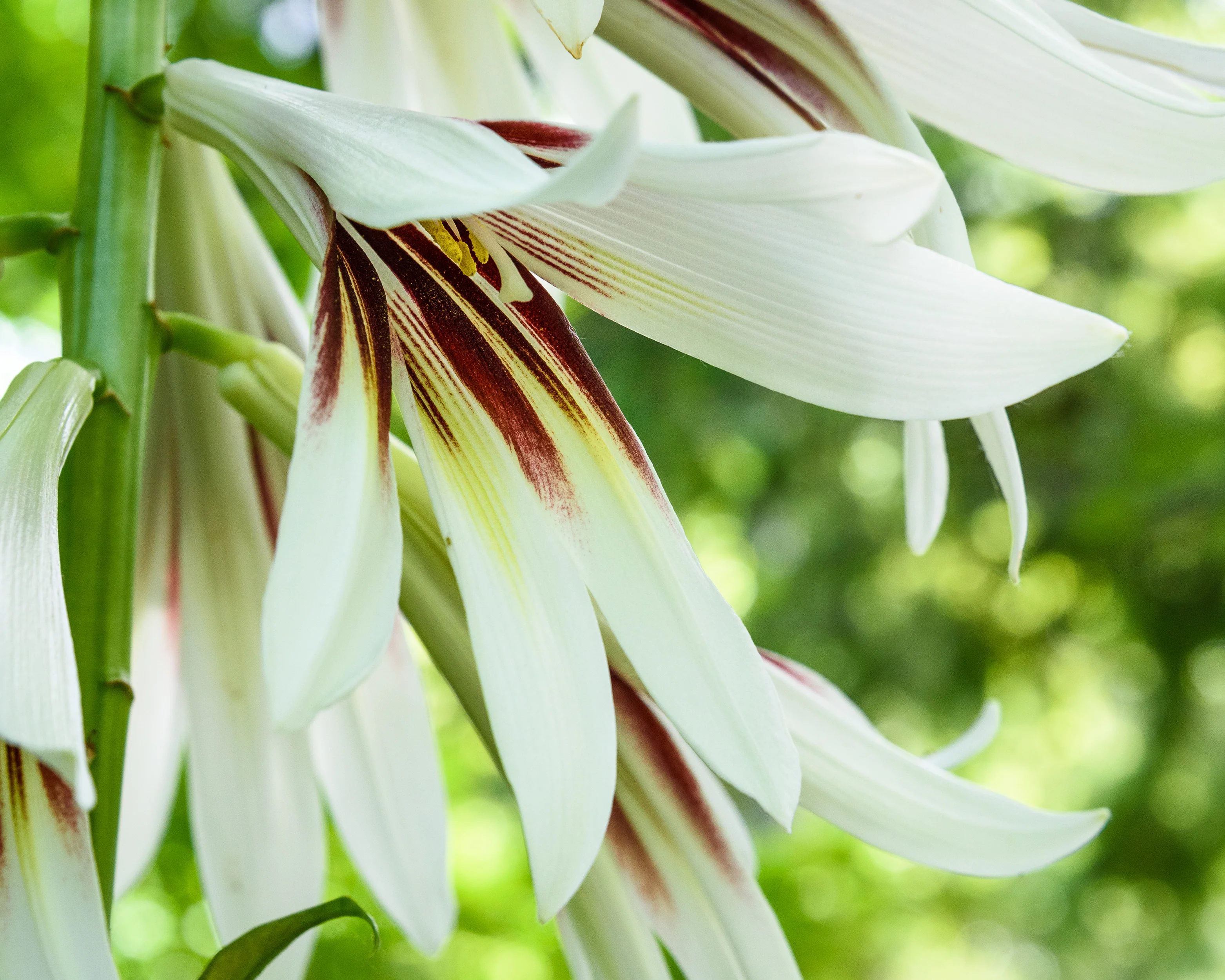
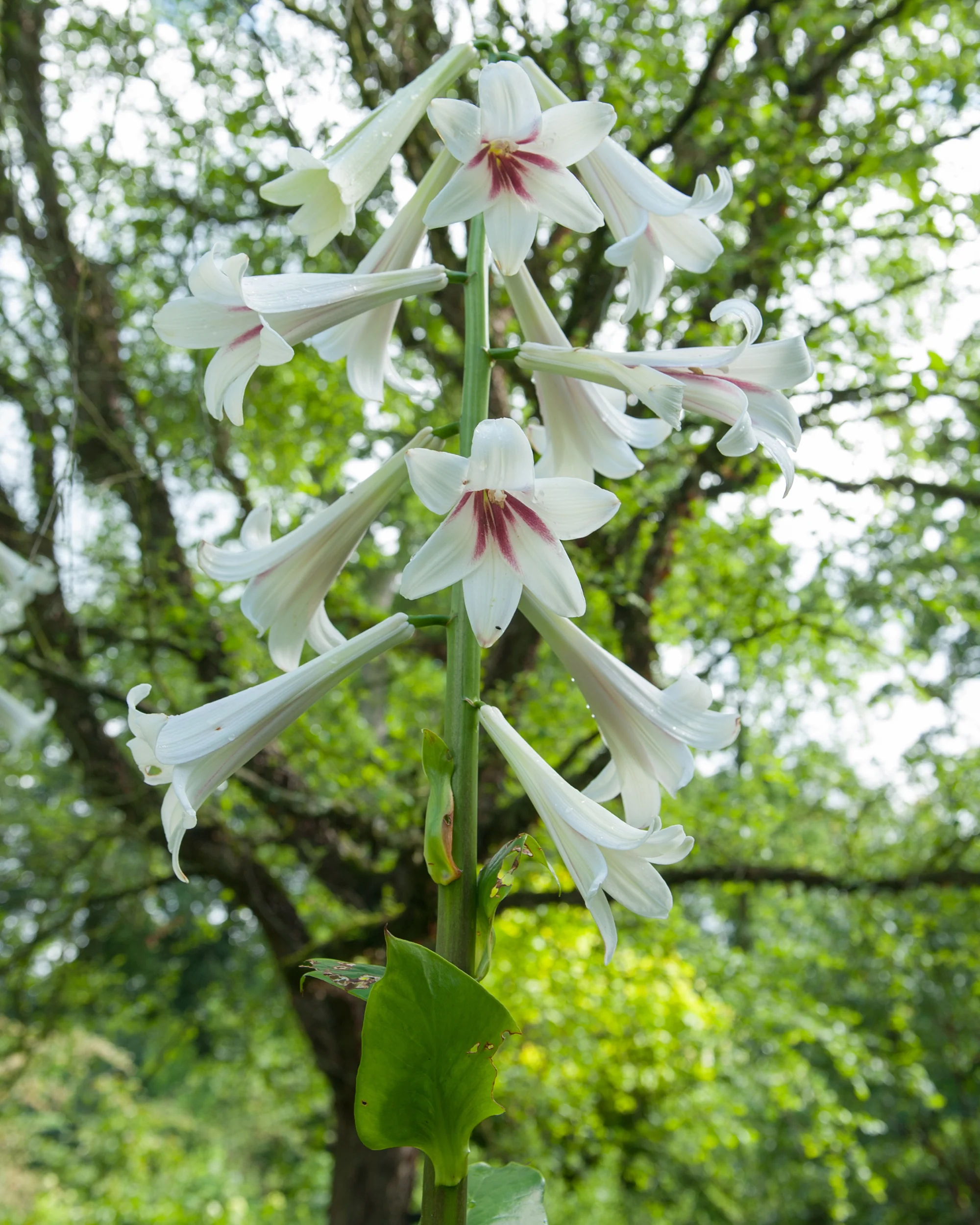
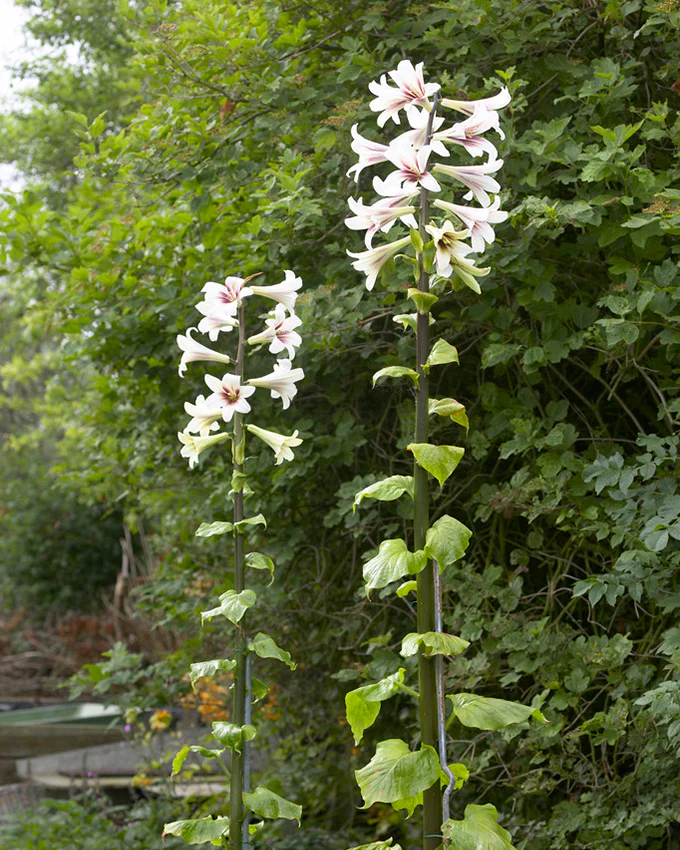
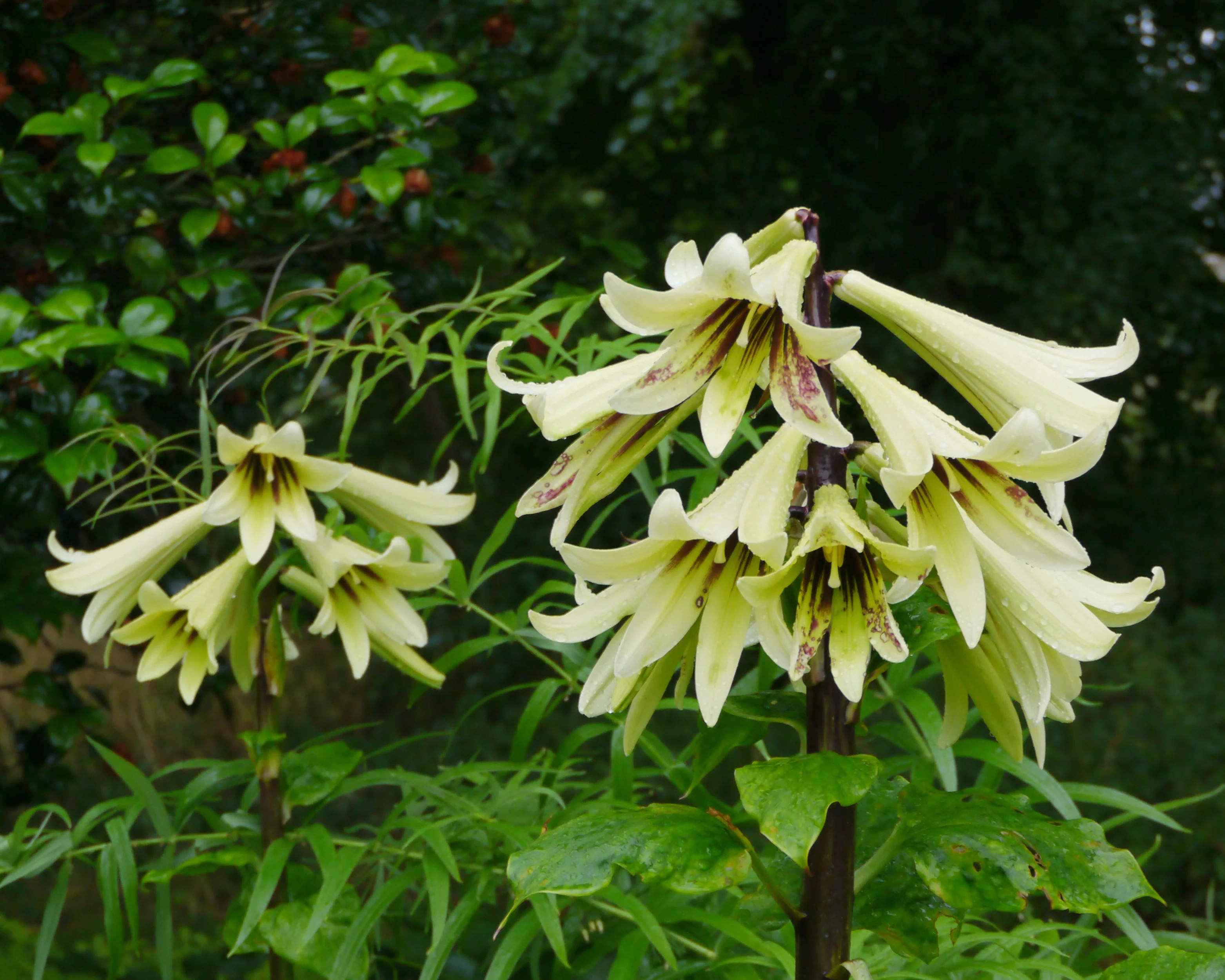
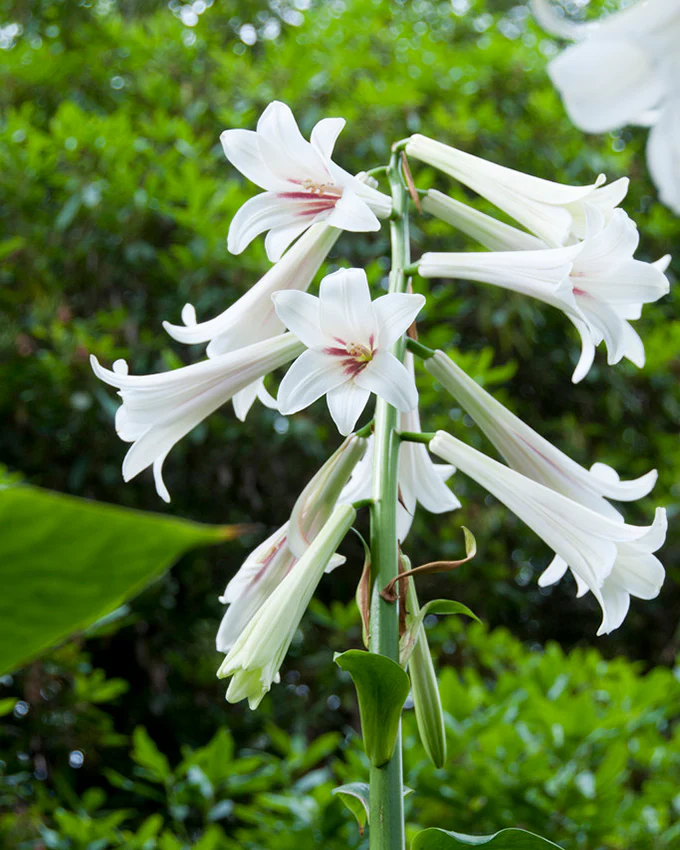
Cardiocrinum giganteum is one of those plants that quietly rewrites your expectations of what a lily can be. Often called the giant Himalayan lily or Yunnan lily, it produces an architectural rosette of fresh green leaves before sending up a dramatic flowering stem that can rise well above head height. Between early and late summer, Cardiocrinum giganteum carries a procession of large, cream-white, trumpet-shaped flowers, each one delicately etched with maroon markings deep in the throat. The scent is unmistakable: rich, warm and softly vanilla-like, drifting through the garden on still evenings. When in bloom, Cardiocrinum giganteum feels less like a border plant and more like a horticultural event, drawing the eye from across the garden and rewarding close inspection with surprising refinement.
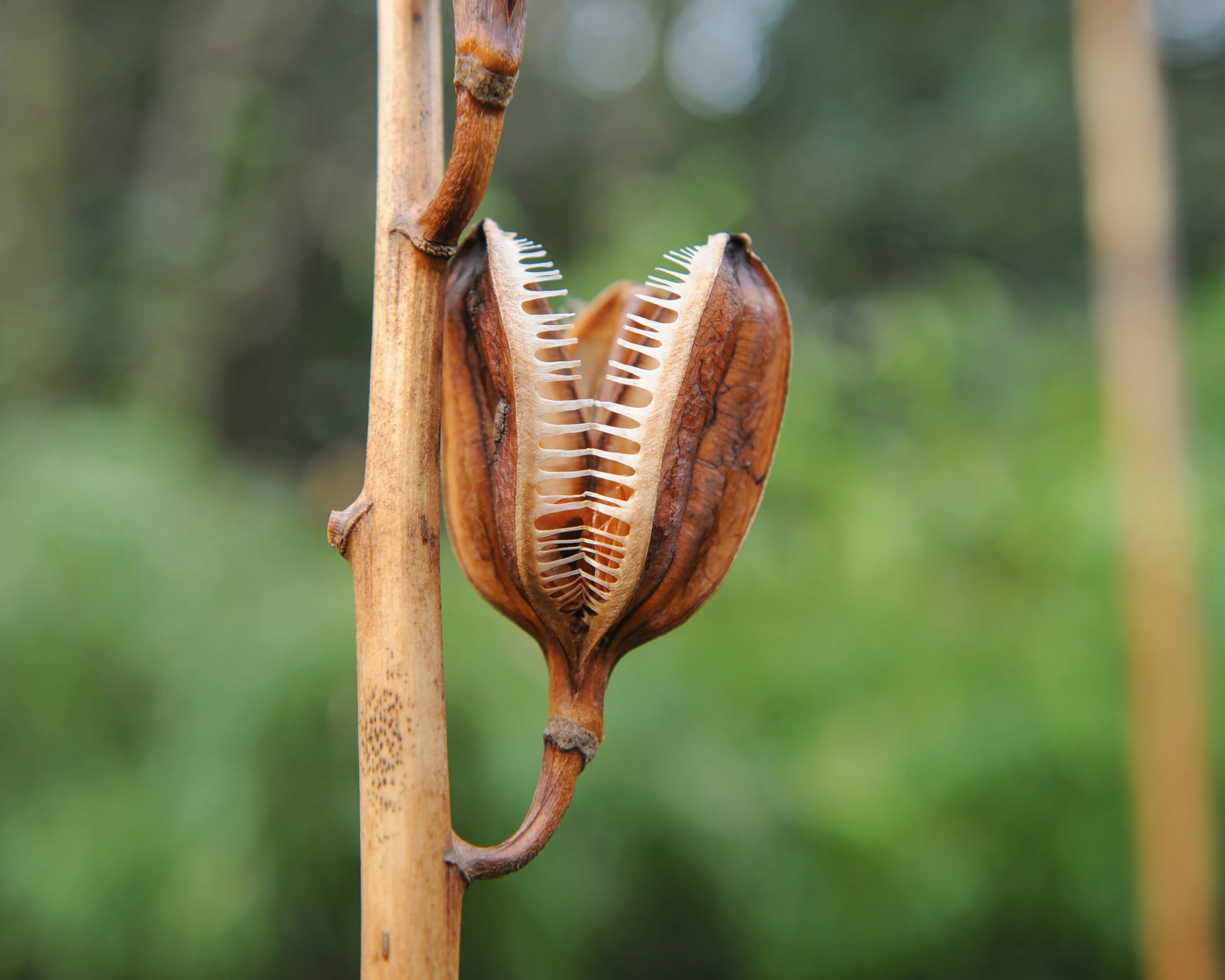
Native to the Himalayas and southwestern China, Cardiocrinum giganteum has a fascinating monocarpic life cycle. After flowering, the parent bulb dies, but not before creating a generous colony of offset bulbs around its base, often accompanied by self-sown seedlings nearby. These young plants take patience, typically three to five years, but the resulting display of multiple flowering stems makes the wait worthwhile. Cardiocrinum giganteum thrives in moisture-retentive, humus-rich soil and light shade, echoing its woodland origins. Even once the flowers of the giant Himalayan lily have faded, the tall stems and toothed seed pods dry beautifully, lending a sculptural quality that intrigues visitors long after the main performance has ended.
Product Information
Product Information
Shipping & Returns
Shipping & Returns
Cardiocrinum giganteum
Cardiocrinum giganteum
Cardiocrinum giganteum is one of those plants that quietly rewrites your expectations of what a lily can be. Often called the giant Himalayan lily or Yunnan lily, it produces an architectural rosette of fresh green leaves before sending up a dramatic flowering stem that can rise well above head height. Between early and late summer, Cardiocrinum giganteum carries a procession of large, cream-white, trumpet-shaped flowers, each one delicately etched with maroon markings deep in the throat. The scent is unmistakable: rich, warm and softly vanilla-like, drifting through the garden on still evenings. When in bloom, Cardiocrinum giganteum feels less like a border plant and more like a horticultural event, drawing the eye from across the garden and rewarding close inspection with surprising refinement.
Native to the Himalayas and southwestern China, Cardiocrinum giganteum has a fascinating monocarpic life cycle. After flowering, the parent bulb dies, but not before creating a generous colony of offset bulbs around its base, often accompanied by self-sown seedlings nearby. These young plants take patience, typically three to five years, but the resulting display of multiple flowering stems makes the wait worthwhile. Cardiocrinum giganteum thrives in moisture-retentive, humus-rich soil and light shade, echoing its woodland origins. Even once the flowers of the giant Himalayan lily have faded, the tall stems and toothed seed pods dry beautifully, lending a sculptural quality that intrigues visitors long after the main performance has ended.
Product Information
Product Information
Shipping & Returns
Shipping & Returns
Description
Cardiocrinum giganteum is one of those plants that quietly rewrites your expectations of what a lily can be. Often called the giant Himalayan lily or Yunnan lily, it produces an architectural rosette of fresh green leaves before sending up a dramatic flowering stem that can rise well above head height. Between early and late summer, Cardiocrinum giganteum carries a procession of large, cream-white, trumpet-shaped flowers, each one delicately etched with maroon markings deep in the throat. The scent is unmistakable: rich, warm and softly vanilla-like, drifting through the garden on still evenings. When in bloom, Cardiocrinum giganteum feels less like a border plant and more like a horticultural event, drawing the eye from across the garden and rewarding close inspection with surprising refinement.
Native to the Himalayas and southwestern China, Cardiocrinum giganteum has a fascinating monocarpic life cycle. After flowering, the parent bulb dies, but not before creating a generous colony of offset bulbs around its base, often accompanied by self-sown seedlings nearby. These young plants take patience, typically three to five years, but the resulting display of multiple flowering stems makes the wait worthwhile. Cardiocrinum giganteum thrives in moisture-retentive, humus-rich soil and light shade, echoing its woodland origins. Even once the flowers of the giant Himalayan lily have faded, the tall stems and toothed seed pods dry beautifully, lending a sculptural quality that intrigues visitors long after the main performance has ended.